We're not American Uncle's agency
We've been shareholders since day one.
This distinction isn't rhetorical. It means that when campaigns underperform, we don't lose a client — we lose our own money. When a launch goes well, we don't send a report — we collect dividends. Skin in the game, in the most literal sense.
In 2016, together with Ribrain (Michele Riccio and Pasquale Bracale) and Alessandro Sportelli — author of three marketing books and creator of the Connection Funnel — we joined American Uncle's ownership structure as a marketing-operations partner. Not as vendors. As shareholders.
Day zero
American Uncle was born in Caserta, Italy in 2016. The idea: bring American snacks, candy, and beverages to Italy through a direct-to-consumer e-commerce. The market didn't exist — it had to be created.
From day one, we handled everything related to growth: advertising, creative, launch strategy, editorial planning, content briefs, campaign scaling. There was no internal marketing team. We were the marketing team.
We didn't inherit a brand. We built it from scratch, one test at a time, one campaign at a time, one customer at a time.
UGC pioneers in Italy
When nobody in Italy was talking about User Generated Content, we were already building entire campaigns on content created by customers. Unboxing videos, reaction clips, spontaneous photos: American Uncle's feed was made by the people who bought, not by a creative agency.
It wasn't a tactical choice. It was a necessity: with limited budget and an inherently "Instagrammable" product (you open a Candy Box and photograph it, period), UGC was the perfect force multiplier.
Over 600 creative sets produced and tested in ten years. Not talent: system. A production, testing, and iteration process that improves every day and has generated a competitive advantage nearly impossible to replicate.
Tons of candy (literally)
American Uncle isn't just a snack e-commerce. Over the years, the project transformed into something much bigger:
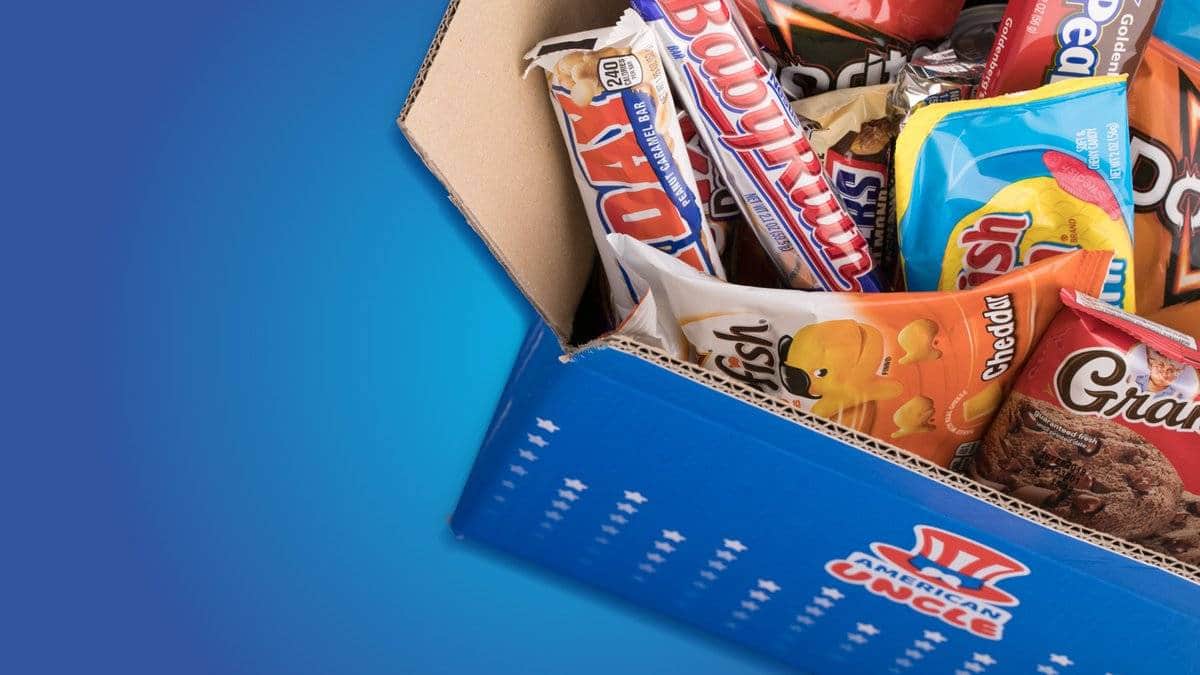
- Candy Box and Wunnie Box — the mystery boxes that defined the category in Italy, an engine of organic virality and the perfect gift for any occasion
- Honions — the most important private label brand, born from deep understanding of what customers wanted
- 3,000+ products in the catalog spanning snacks, candy, beverages, cereals, and niche American products
- 700+ tons of product shipped across Italy and Europe
- 550,000+ orders fulfilled since founding
These numbers aren't the result of a campaign. They're the result of ten years of compounding work.
From online to offline
Growth didn't stop at e-commerce. American Uncle opened its first physical store in Caserta, launched B2B distribution to shops and retail locations, and entered large-scale retail (GDO in Italy).
A journey that goes in the opposite direction of many digital brands: from pixel to brick, from online acquisition to physical presence, from Italy to Europe.
Each step required rethinking strategy, creative, and positioning. You don't sell the same way to an end consumer and to a large retail buyer.
The public numbers
These aren't numbers from a sales presentation. They're public data, verifiable from the Italian company registry (visura camerale):
| Year | Revenue |
|---|---|
| 2016 | Business launch |
| 2017 | First hundreds of thousands of euros |
| 2018–2020 | Steady growth, millions in revenue |
| 2021–2023 | Consolidation and diversification |
| 2024–2025 | Exceeded 25 million in cumulative revenue |
We don't publish the year-by-year breakdown, but the total speaks for itself: over 25 million euros in revenue since founding. With a repeat customer rate above 25% — the strongest signal that the brand truly works.
The handoff
Today, American Uncle's marketing operations are fully internal. The team we helped build manages advertising, creative, and strategy independently.
It's not a loss. It's the best possible outcome.
When you build something as a shareholder, success isn't measured in renewed contracts. It's measured in the company's ability to walk on its own. Ten years of work, and now the brand no longer needs us for daily operations.
The Slack channel emptied out gradually. Briefs became less frequent. Calls grew sparse. Not because something went wrong — because everything had gone as it should.
This is the kind of case study you won't find in an agency's portfolio. Because agencies don't talk about when the client becomes independent. We do, because we weren't the agency. We were shareholders. And we still are.